On September 9, the Hangzhou International Artificial Intelligence Application and Robotics Innovation Expo and the 2026 Yangtze River Delta AI Innovation Empowerment Series Event were held at the Hangzhou International Expo Center. The event was jointly hosted by the Hangzhou Association for Science and Technology, the Zhejiang Association for Artificial Intelligence, and the Intelligent Education Research Center of Zhejiang University. Leaders from industry authorities, academicians, experts, and heads of well-known enterprises were invited to attend, engaging in in-depth discussions on hot topics such as embodied intelligence development trends and robot industrialization paths. Fulltime Robotics was invited to attend the event.

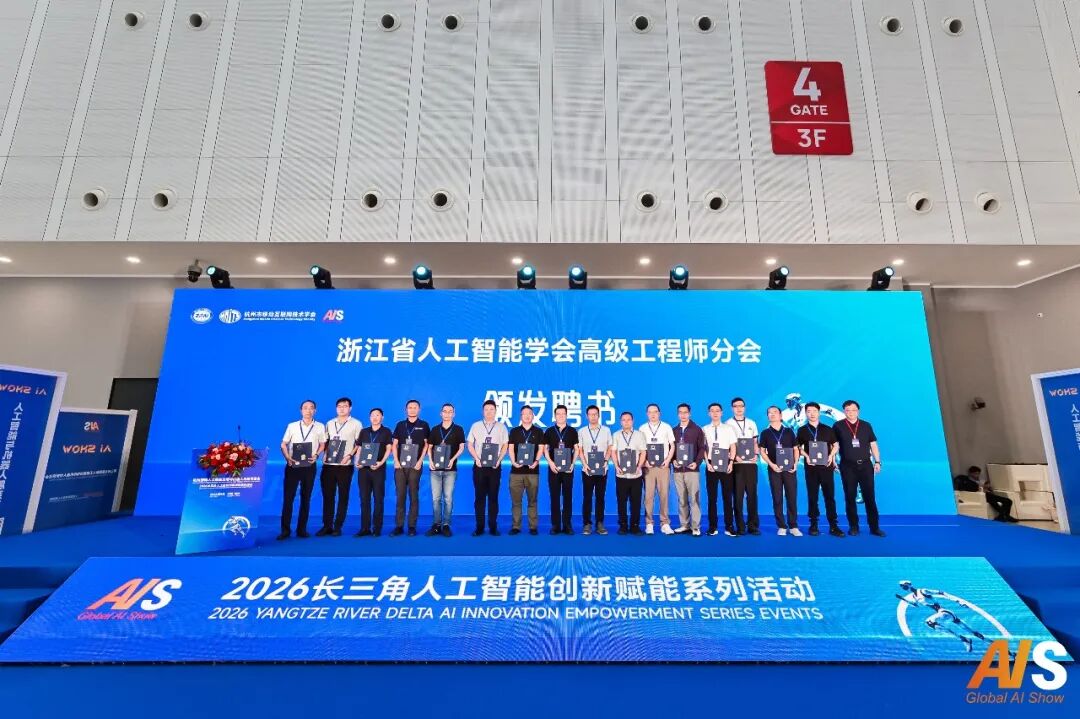
During the event, Li Zike, Founder and CEO of Hangzhou Fulltime Robotics Co., Ltd., was officially appointed as a member of the Senior Engineer Branch of the Zhejiang Association for Artificial Intelligence. The association is a professional social organization approved by relevant Zhejiang provincial government departments, supervised by the Zhejiang Association for Science and Technology, and brings together high-end talent in the AI field.

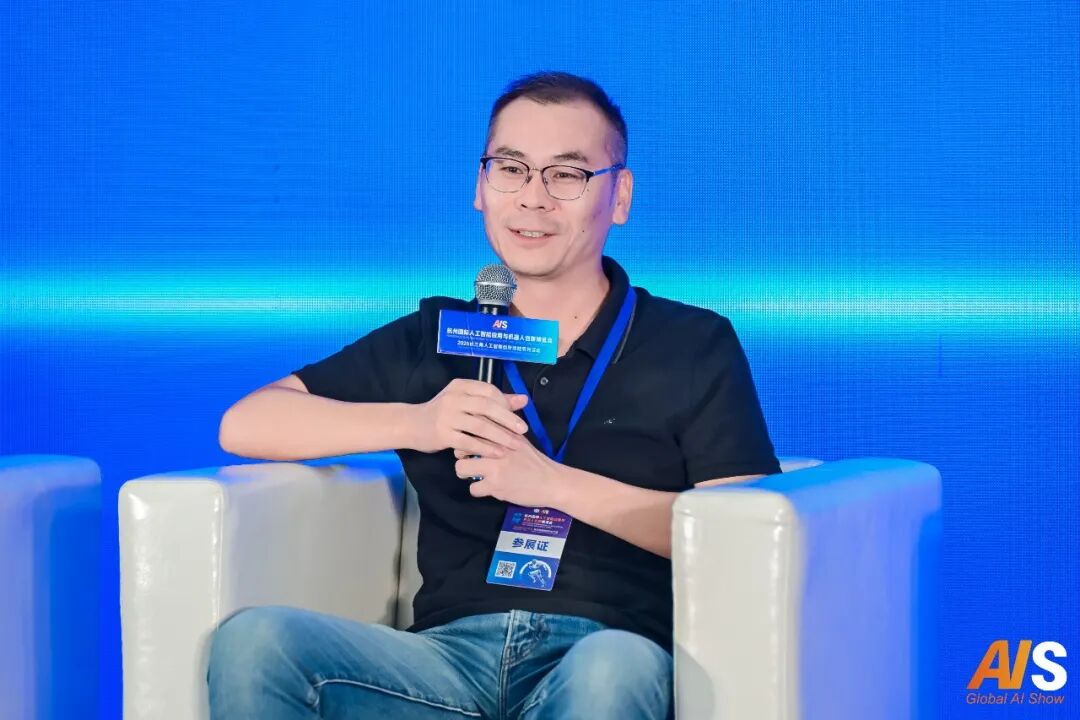
At the roundtable forum "Embodied Intelligence: Opportunities and Challenges of AI Entering the Physical World," Li Zike engaged in dialogue with representatives from Zhejiang University Engineering Robotics Center, Hikrobot, Shuangqing Technology, Aohai Robotics, Chengshi Robotics, and other enterprises and research institutions, sharing practical experiences and reflections on embodied intelligence in the construction industry.
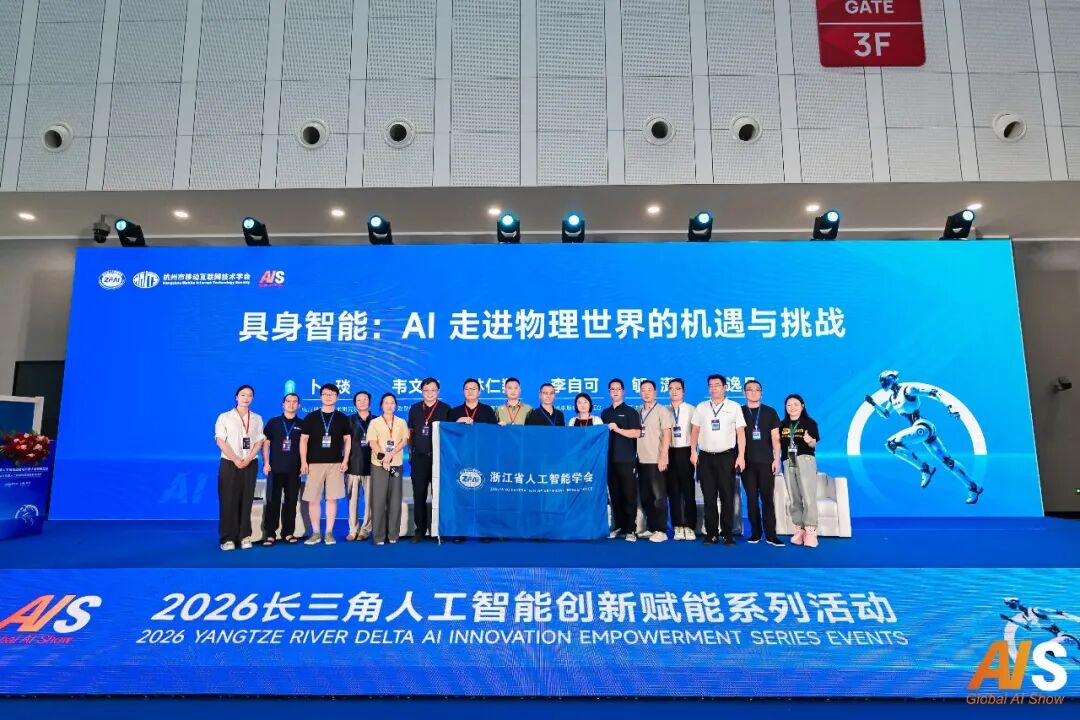
Implementation of Embodied Intelligence in Construction
When discussing "the core value of embodied intelligence," Li Zike pointed out that the core value of embodied intelligence lies in interaction with the physical world—moving from digital intelligence to physical intelligence. The maturity of visual models and large language models has advanced AI development, but interacting with the physical world requires combining more modalities, understanding three-dimensional space and spatial knowledge graphs, and adding a time dimension to complete dynamic prediction and task generation.
He further shared Fulltime Robotics' practice in this direction: the company's continuously developed "Spatial Brain" is a vertical model implemented in building construction scenarios, covering 3D spatial reconstruction, visual recognition, process parameterization, and task generation, executing tasks through the robot's physical capabilities. Compared with traditional pre-programming models, the "Spatial Brain" achieves an upgrade from pre-programming to autonomous task generation. He particularly emphasized, "For the construction industry, its typical characteristics are non-standard and unstructured—every building is different, requiring robots to have extremely strong adaptability. The implementation of embodied intelligence in construction will generate enormous social and commercial value."
Define the Scenario First, Then Choose the Form
In the discussion on "developing embodied intelligence: should we prioritize general-purpose humanoid directions or deeply cultivate vertical specialized scenarios," Li Zike believed that humanoid is just one form of the body, and the core remains the improvement of the robot brain's capabilities. Whether humanoid or other forms, the scenario should be defined first, then the most suitable form chosen, to form commercialized products with optimal performance and cost.
This concept is fully demonstrated in Fulltime Robotics' product layout. The company focuses on the R&D and application of construction robots and spatial brains, with core products covering indoor coating construction robots and ground concrete construction robots. Taking the fourth-generation flagship P600 Max globally launched in April 2026 as an example, this product can complete five major processes—putty spraying, scraping, sanding, dust extraction, and paint spraying—with a single machine. Compared with industry solutions using 2-3 separate machines for collaboration, it reduces costs by two-thirds and improves construction efficiency by 7 times compared to manual labor. To date, Fulltime Robotics' cumulative construction area has exceeded 5 million square meters. Its products have been applied in bulk at leading construction enterprises including CSCEC, CREC, Zhejiang Construction Investment Group, Shanghai Construction Group, and Beijing Construction Group, with business spanning Chinese mainland, Hong Kong, Singapore, Hungary, and other countries and regions.

Currently, Zhejiang Province is deeply advancing the "AI+" initiative, aiming to create more than 300 typical application scenarios that are "quantifiably beneficial and replicable" by the end of 2026. Fulltime Robotics will continue to deepen its commitment to construction robotics technology R&D and scenario implementation, empowering the transformation and upgrading of the construction industry with embodied intelligence and supporting the high-quality development of the intelligent construction industry.